
Is your warehouse always running out of space? Struggling with low picking efficiency and rising management costs?
The root cause often lies not in the square footage of your warehouse, but in its backbone—the storage rack system.
As the foundation of modern logistics and warehousing, racks are no longer just simple storage platforms. They are the core that connects space planning, workflow, and intelligent management—directly determining warehouse capacity, efficiency, and costs.
So, with so many rack types on the market, how do you choose the right one to break your storage bottlenecks? This Ultimate Guide will walk you through the key steps to selecting the perfect racking system, helping you maximize space utilization, improve efficiency, and support business growth.
Step 1: Diagnose Your Needs — 4 Key Questions
Choosing a rack system is not one-size-fits-all. Start by answering these fundamental questions to build a solid foundation for your decision.
1. What are the characteristics of your inventory?
Weight & Size: Are you storing palletized steel coils or lightweight e-commerce items? This determines load capacity.
SKU Volume & Variety: Do you have a high number of low-quantity SKUs, or fewer SKUs in bulk? This influences whether you need wide aisles or high-density storage.
Turnover Rate & Retrieval Needs: Is your inventory fast-moving (FIFO required) or slow-moving (FILO acceptable)? The answer is critical.
2. What are your warehouse’s physical limitations?
Clear Height: High ceilings are your greatest asset for vertical storage.
Floor Conditions & Layout: Consider column placement, sprinkler systems, and floor load capacity—all of which affect racking type and layout.
3. What is your operational workflow?
Manual vs. Automated: Do you use forklifts—and which type? Do you plan to integrate AGVs or shuttle systems? Your equipment determines aisle width and rack compatibility.
4. What is your budget and growth plan?
Consider both upfront costs and long-term ROI. A system that doubles capacity but costs slightly more is often cheaper than relocation.
Step 2: Explore Your Options — A Guide to Common Rack Types
Here are the most popular warehouse racking systems and their ideal applications:
1. Selective Pallet Racks — The All-Rounder
How It Works: The most common system. Each pallet can be independently accessed.
Best For: Almost any warehouse with diverse SKUs. Excellent selectivity.
Space Utilization: Good, but requires wider aisles for forklifts.
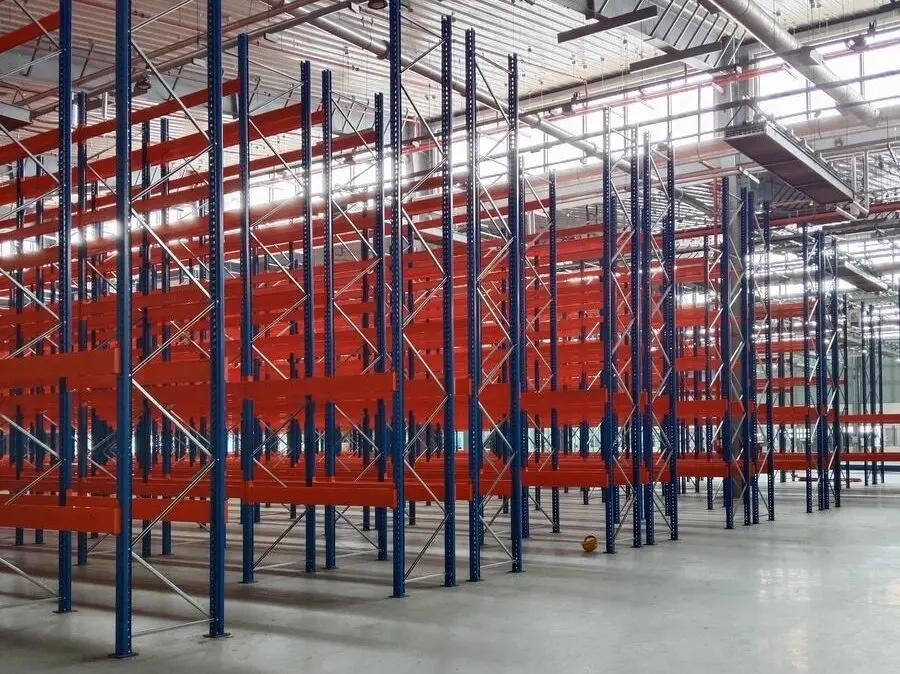
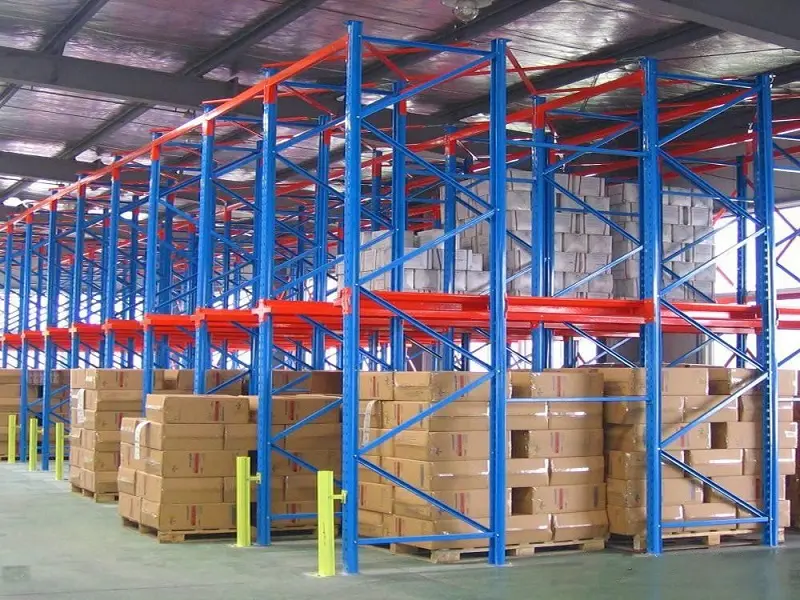
2. Drive-In / Drive-Through Racks — High-Density for Slow Movers
How It Works: Forklifts drive directly into the rack structure. Drive-through allows FIFO; drive-in is typically FILO.
Best For: Cold storage, beverages, or large volumes of slow-moving goods.
Space Utilization: Excellent—maximizes space by reducing aisle count.
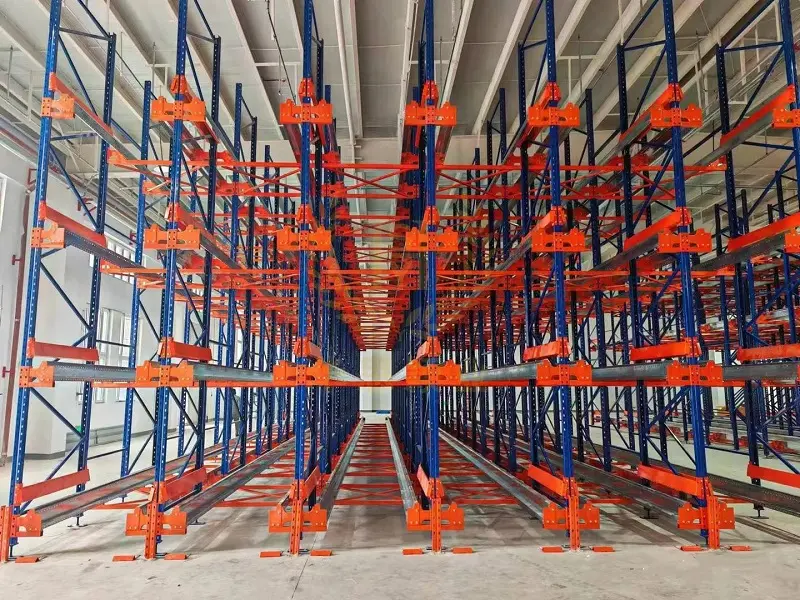
3. Shuttle Racks — High Density Meets Automation
How It Works: Consists of racks, rail-running electric shuttles, and a control system. Forklifts place pallets at the aisle entrance, while the shuttle performs precise storage and retrieval inside the aisle, achieving semi-automation.
Best For: Industries with uniform product categories, large batch volumes, and a need for high-density storage, such as food, beverages, and chemicals. An ideal transitional solution toward fully automated warehouses.
Space Utilization: Extremely high. Aisle space is greatly reduced, with enhanced safety.
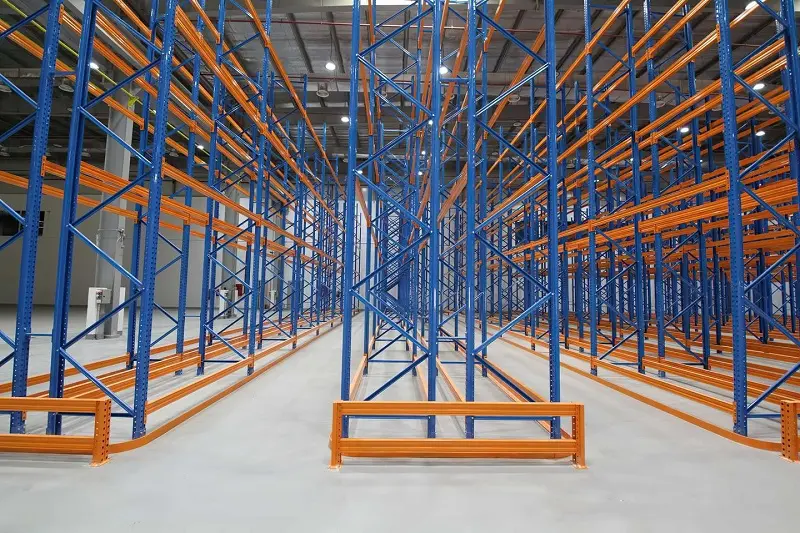
4. Very Narrow Aisle (VNA) Racks — Maximize Space Within Existing Facilities
How It Works: Operated with special VNA forklifts in aisles as narrow as 1.8m.
Best For: Warehouses with high ceilings but limited floor space.
Space Utilization: Very high—can increase density up to 50% compared with selective racks.
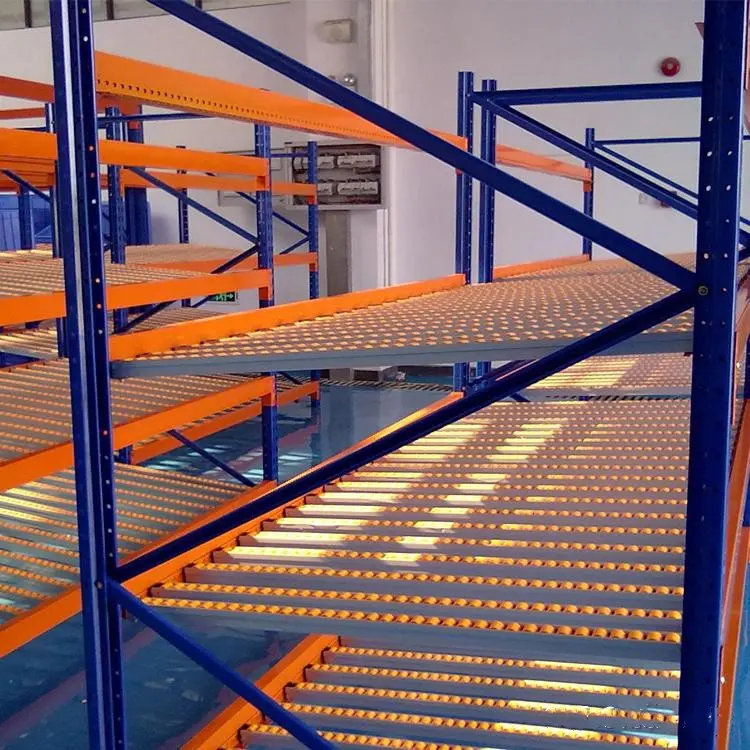
5. Flow Racks — The FIFO Efficiency Engine
How It Works: Gravity-driven rollers move pallets from loading to picking face.
Best For: High-throughput, FIFO inventory such as perishables or FMCG. Significantly reduces picking time.
Space Utilization: High—ideal for perfect stock rotation with dense storage.
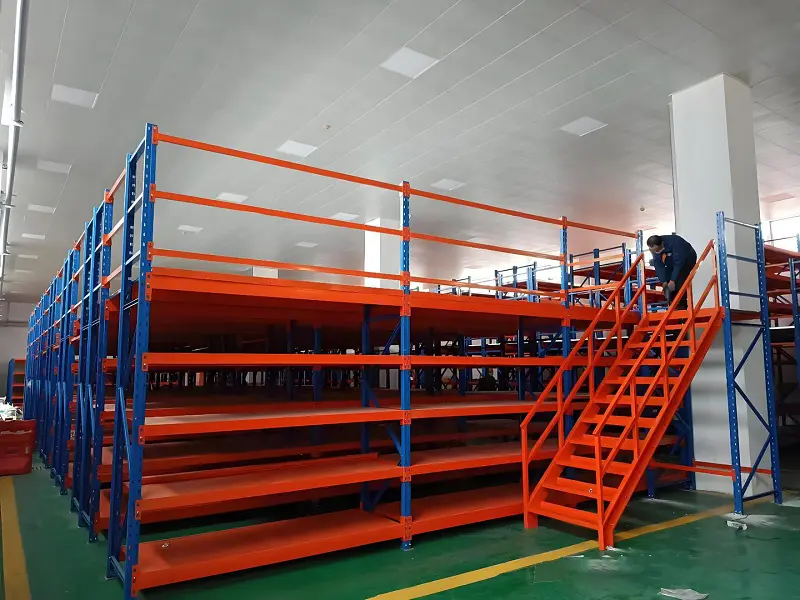
6. Mezzanine Racks — Create a Second Level of Space
How It Works: An elevated platform effectively doubles usable floor space.
Best For: Lightweight to medium-weight items, slow movers, or small parts. Great for e-commerce fulfillment centers.
Space Utilization: Excellent for facilities with limited floor area.
Step 3: Make Your Decision — A Simple Selection Matrix
Now that you are familiar with the mainstream racking types, here’s a decision matrix (based on Step 2) to help you make an initial selection more quickly:
| If your top priority is… | And you need… | Your best racking option is… |
|---|---|---|
| Maximum selectivity & accessibility | Access to every SKU at any time | Selective Pallet Racks |
| Maximum storage density | Store the largest number of pallets in limited space with uniform SKUs | Drive-In/Drive-Through Racks or Shuttle Racks |
| Automation & high efficiency | Reduce manual handling and improve inbound/outbound efficiency | Shuttle Racks |
| Perfect inventory rotation (FIFO) | Automated stock rotation and faster picking efficiency | Flow Racks |
| Utilizing vertical space | Make full use of high ceilings when floor space is limited | Very Narrow Aisle (VNA) Racks |
| Increasing total storage area | Create double storage space within the same footprint | Mezzanine Racks |
⚠️ Note: This matrix is only a starting point. Final decisions should be based on your warehouse conditions, inventory features, and budget. Our experts can provide a customized solution tailored to your needs.
Conclusion: Stop Fighting for Space — Start Optimizing It
A lack of warehouse space is often a sign of business growth—but it doesn’t have to become a crisis. The solution isn’t always “more space”; it’s smarter storage.
By understanding your inventory, operations, and the power of advanced racking systems, you can transform a crowded warehouse into a model of efficiency and scalability. The right rack system is not an expense—it’s a strategic investment, delivering ROI through improved productivity, lower labor costs, and deferred relocation expenses.
Ready to find your best racking solution?
Don’t let limited space hold your business back. Contact our storage experts today for a free, no-obligation warehouse layout analysis. We’ll help you diagnose bottlenecks, recommend the ideal racking system, and prepare your operations for the future.